

Running a small business often means wearing many hats, managing customers, marketing, and keeping the books in order. But one area many owners overlook is protecting their online content. Your website holds valuable intellectual property like text, images, graphics, and videos that represent your brand. The question is: do you need a copyright notice to safeguard it?
This article explores what a copyright notice is, why it matters, and how it can protect your business. Whether you’re just starting your website or looking to strengthen its legal protections, understanding this small but powerful addition can save you from big headaches later.
What is a Copyright Notice?
A copyright notice is a short statement that appears on your website or digital materials. It typically includes the © symbol, the year, and the owner’s name. While not required by law in many countries, including the U.S., it makes it clear to visitors that your content is protected.
Do I Need to Put a Copyright Notice on My Website?
Yes, a copyright notice is highly recommended even though it’s not required. For small business owners, it’s a low-effort, high-reward way to safeguard valuable online assets.
Placing a copyright notice on your website might look like a small detail, but it can carry a lot of weight for your business. It not only signals professionalism but also helps protect the content you worked hard to create. A simple notice can serve as an extra layer of security for your intellectual property.
Professionalism & Clear Ownership
A copyright notice leaves no room for doubt about who holds the rights to your website content, images, or other materials. Instead of someone assuming the work is free to use, the notice identifies your business as the owner. It also provides a direct point of reference for individuals or companies that may want to license or request permission, helping avoid misunderstandings.
Legal Support
When a copyright dispute arises, having a notice can make a real difference. Courts view it as evidence that you took deliberate action to protect your work, which can strengthen your case.
It may also block the defense of “innocent infringement,” where someone claims they didn’t know the content was copyrighted. By proving you marked your work clearly, you place yourself in a stronger position during any lawful proceedings.
Global Coverage
In today’s digital landscape, your website can reach visitors far beyond your local market. A copyright notice ensures your content is recognized as protected in multiple regions, thanks to international treaties and conventions. While copyright laws differ from country to country, the notice signals your proprietorship globally, helping reinforce your rights even in places where rules may not be as clear.
Preventing Misuse
One of the simplest yet most effective advantages of a copyright notice is its deterrent effect. People are far less likely to copy or distribute your material when they see it’s clearly marked as protected. While it doesn’t eliminate infringement entirely, it serves as a first line of defense by discouraging casual misuse and reminding others that your intellectual property is not free for the taking.
Read More: Why Copyright Registration Is Critical for Protecting Your Original Works
Are Websites Automatically Copyrighted?
Although copyright is automatic, a notice reinforces protection. Under U.S. law, original creative work is automatically copyrighted the moment it’s created and fixed in a tangible form, such as your website’s text, images, or code. If you’re unsure about the scope of protection for your site, consulting a copyright lawyer can provide clarity.
How to Create a Copyright Notice
A copyright notice is simple to set up. A complete notice only needs a few basic elements, but each one plays a role in clearly marking your content as protected. It usually includes:
- Copyright Symbol (©): This instantly signals that the content is copyrighted and not free for public use. While you can spell out “Copyright,” the © symbol is universally recognized and keeps the notice concise.
- Year of Publication: Include the year when the content was first published. If your site or materials are regularly updated, you can show a range of years (for example, © 2022–2025) to reflect ongoing updates.
- Owner’s Name: Add the name of the individual or business that owns the rights. Using your full business name is best, as it makes clear and avoids confusion.
Example: © 2025 Your Business Name LLC
Do I Need a Copyright at the Bottom of My Website?
Yes, the best place to put your copyright notice is at the bottom (footer) of your website. This ensures it appears on every page and is easy to see across devices, including mobile.
Where to Place the Notice:
-
- Copyright in Your Website Footer
The footer is the standard spot where users expect to see it. Use a readable font and include all key components. - Copyright in Your Mobile Apps
If you also run apps, add a copyright in the description or app store page so users see it before downloading. - Copyright in Your Email Footers
Include a copyright notice in marketing emails to protect text, videos, or graphics shared with subscribers. - Copyright on Downloadable Materials
Place the notice directly on documents, ebooks, or product files to make it clear when users download them. - Other Locations
- Books or ebooks often have a copyright page.
- Photos and art may feature a watermark or small label.
- YouTube videos typically have a copyright notice in the description or credits.
- Copyright in Your Website Footer
Keep in mind: a copyright notice can’t cover everything. Common knowledge, ideas, or personal styles generally aren’t protected.
Also Read: What’s the Difference Between a Patent, a Trademark, and a Copyright?
Copyright Notice Examples
Let’s look at real-world examples to see how major brands use copyright notices.
In the website footer, you’ll find:
- The © symbol.
- A date range: 1986–2025.
- The copyright owner: Disney/Pixar.
- No added rights statement, which means all rights are reserved.
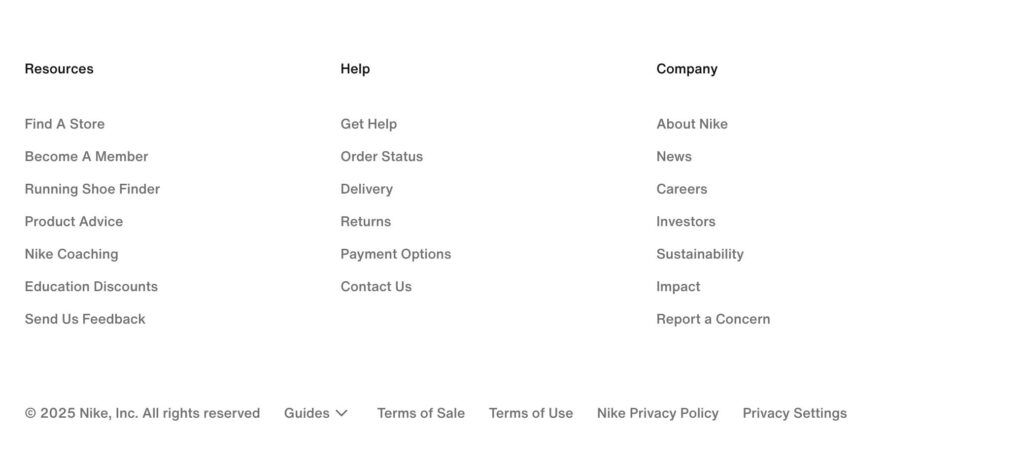
Nike’s Copyright Example
Coca-Cola’s Copyright Example
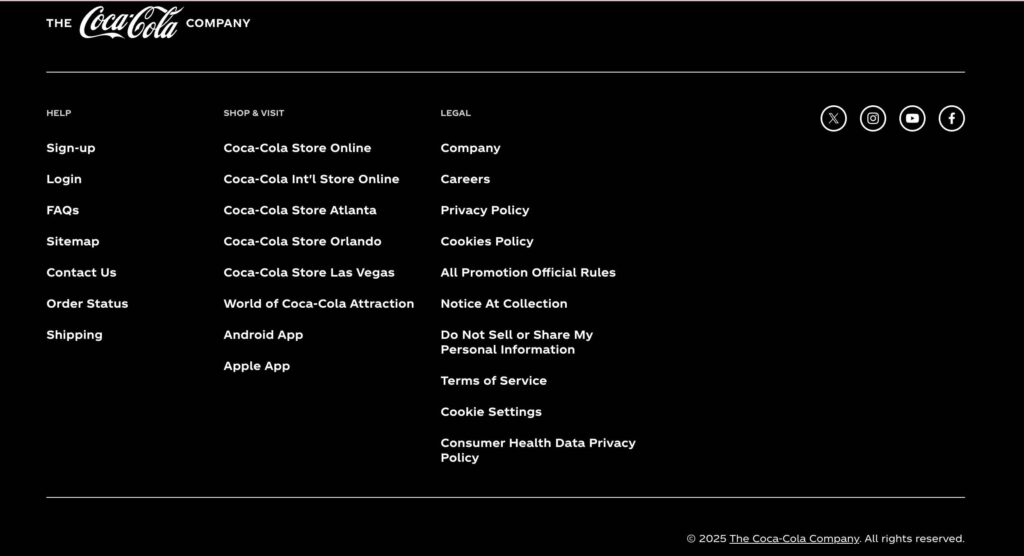
They also expand on their copyright in their terms of use agreement, detailing which works are covered. This helps avoid confusion. Small businesses can adopt a similar approach by including both a footer notice and an expanded clause in their terms of use.
When to Use a Copyright Notice?
A copyright notice is helpful any time you publish original material that you want to protect. This includes written content, images, videos, logos, designs, or downloadable resources shared on your website. By displaying the notice, you make it clear that these works are not free for others to copy or distribute without permission.
It’s especially important to use a copyright notice if your business relies on content marketing, branded visuals, or proprietary resources to attract and serve customers. Even though copyright begins the moment your work is created, adding a notice serves as a visible reminder to anyone viewing your materials that your intellectual property is legally protected.
Related Article: Protecting Intellectual Property: What Startups Need to Know
Protecting Your Business with the Right Support

For small business owners, protecting creative assets is just as important as growing the business itself. Copyright safeguards can prevent costly disputes and give you the confidence to share, publish, and expand your work. Having experienced intellectual property lawyers by your side ensures that your rights are secured and enforced when needed.
At Heimlich Law PC, we help entrepreneurs and creators take proactive steps to protect their ideas, content, and brand. Whether you need guidance on copyright registration, advice on licensing, or representation in a dispute, our firm provides clear strategies tailored to your business.
If you’re ready to protect what you’ve built, contact Heimlich Law PC today to schedule a consultation.