
An employee hands in their resignation. Two weeks later, they start at a direct competitor. Within months, your competitor launches a product that looks suspiciously familiar. Sounds like a nightmare? For many businesses, this scenario is entirely preventable.
Trade secret protection does not begin when someone gives notice. It starts the day you identify what makes your business valuable and continues long after a former employee clears out their desk.
The companies that avoid costly misappropriation disputes build layered safeguards across the entire employment lifecycle: identification, agreements, access controls, offboarding, monitoring, and enforcement. This guide walks you through each one.
What Counts as a Trade Secret Under the Law
Before you can protect anything, you need to define exactly what you are protecting. Courts will not enforce vague claims. You must pinpoint which information qualifies for legal protection and document it thoroughly.
Legal Criteria That Makes Information a Trade Secret
The Defend Trade Secrets Act (DTSA) at the federal level and the Uniform Trade Secrets Act (UTSA), adopted in California through Civil Code § 3426, require two conditions for information to qualify as a trade secret:
- The information must derive independent economic value because it is not generally known to competitors or the public, and
- Your business must take reasonable measures to keep it secret.
Think beyond formulas and source code. Customer pricing models, vendor contract terms, internal sales strategies, proprietary manufacturing processes, and compiled data sets can all qualify. The key distinction: general skills and industry knowledge that employees develop during their tenure do not count. Your engineer’s understanding of common coding practices is theirs. Your proprietary algorithm does not.
Read More: What Qualifies as a Trade Secret Under California Law?
Conducting a Trade Secret Audit
Your trade secret policy means little if your company cannot name what it covers. Conduct a department-by-department audit to catalog every piece of information that provides a competitive edge. Assign each asset a sensitivity tier (e.g., restricted, confidential, internal) and record who currently has access.
A thorough inventory gives you operational visibility into where your most valuable information lives, who can access it, and where coverage gaps exist.
Read More: How Can You Legally Protect Your Company’s Trade Secrets?
Building Preventive Agreements That Hold Up in Court
Once you know what you are protecting, the next step is binding employees to specific obligations. The contractual framework you establish during onboarding creates legally binding duties that survive the employment relationship. These agreements form the backbone of your trade secret protection strategy.
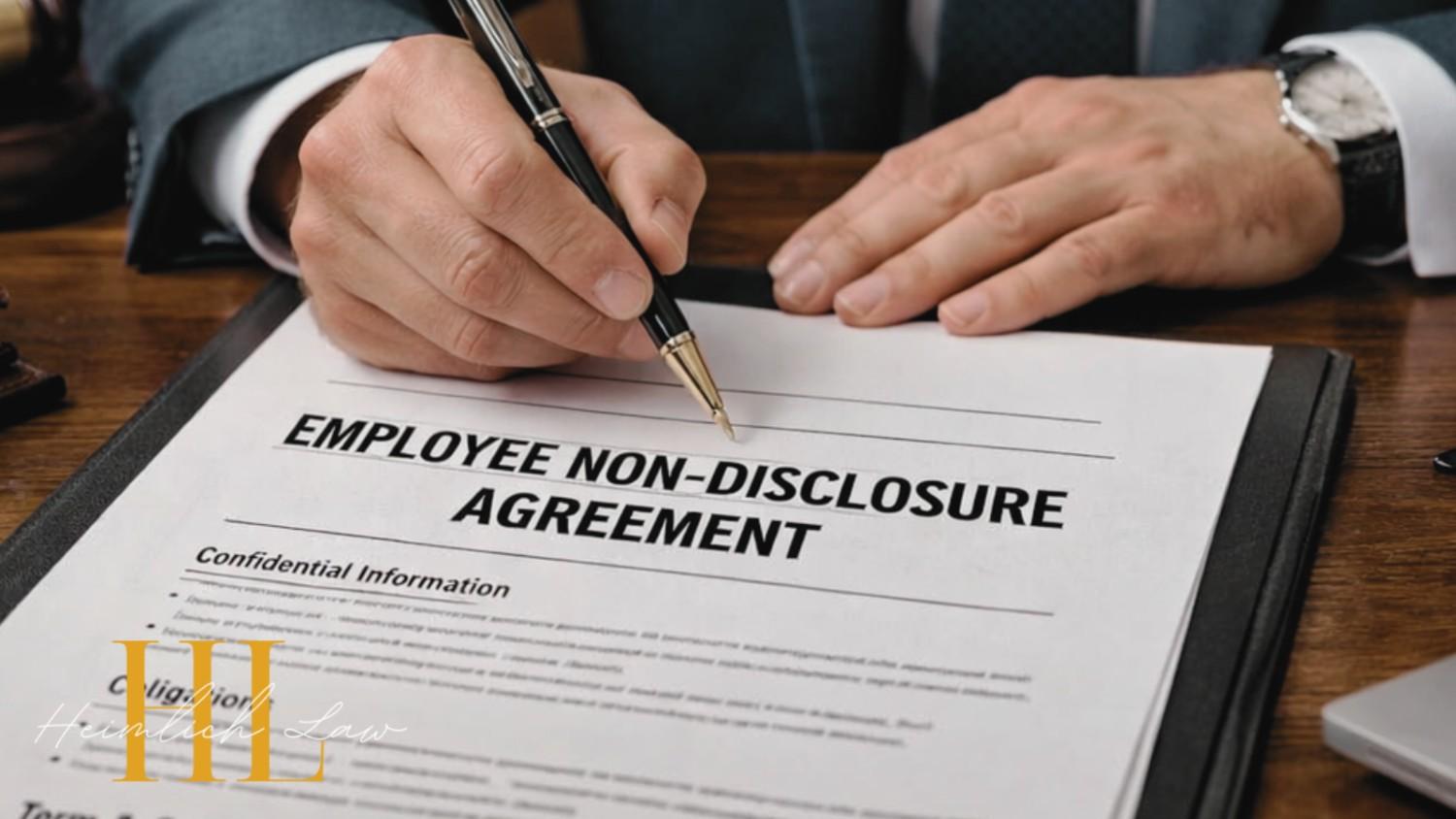
Drafting Effective Confidentiality and NDA Provisions
A strong employee confidentiality agreement does more than state “all confidential information is protected.” Vague language collapses under legal scrutiny. Your NDA should:
- Itemize categories of protected information (customer lists, technical specifications, financial projections, supplier terms)
- Define handling obligations that specify how employees must store, access, and transmit sensitive data
- Specify the duration of post-employment confidentiality duties
- Require return of materials upon departure, covering all company data and devices
California prohibits non-compete agreements under Business and Professions Code § 16600. That makes a well-drafted trade secret NDA your primary contractual tool. Without enforceable non-competes, your NDA must carry the full weight of post-employment protection.
One additional requirement: the DTSA requires employers to include a whistleblower immunity notice in any contract or agreement that governs trade secrets. Under 18 U.S.C. § 1833(b), employees who disclose trade secrets confidentially to a government official or attorney for the purpose of reporting a suspected legal violation are immune from liability. If your NDA omits this notice, you may lose the right to recover exemplary damages or attorney fees in a DTSA action.
Employment Agreement Clauses That Reinforce Protection
NDAs work best as part of a broader package of trade secret agreements. Pair them with:
- Invention assignment clauses that confirm your company owns any intellectual property created during employment
- Work-for-hire provisions covering creative outputs and technical developments
- Acknowledgment sections where the employee confirms they received and understood your trade secret policy
Timing matters. Agreements signed at the start of employment, supported by the consideration of the job offer itself, carry more weight than documents presented mid-employment without additional consideration. If you ask a current employee to sign new restrictions, pair the request with a promotion, bonus, or other tangible benefit.
Training Employees on Their Obligations
A signature on day one is not enough. You need evidence of ongoing awareness, not a single acknowledgment buried in an onboarding packet.
Build your training program around annual refreshers on data-handling protocols, department-specific sessions on the types of trade secrets each team handles, and attendance logs. These training records prove employee awareness of their specific duties, which becomes a distinct category of evidence if a departing employee later claims they did not understand their obligations.
Preventing Unauthorized Access During Employment
Agreements tell employees what they cannot do. Access controls stop them from reaching protected information in the first place. You cannot safeguard data that every person in your organization can access freely.
Implementing Need-to-Know Data Access Policies
Structure your systems so employees can access only the trade secrets their roles require. Practical steps include:
- Role-based permissions that limit database and file access by job function
- Data segmentation, separating trade secrets by sensitivity tier
- Encrypted file systems for your most sensitive assets
- Multi-factor authentication for databases containing proprietary information
- Physical access restrictions for server rooms, R&D labs, and secure document storage
Your sales representative needs access to customer pricing, but not your source code. Your engineer needs technical specifications, but not your vendor contract terms. Segmenting access reduces the volume of trade secrets that any single departing employee could potentially take.
Read More: How can a lawyer assist in protecting your trade secrets from employee theft?
Detecting Irregular Activity Through Monitoring
Where access controls serve as a prevention layer, monitoring functions as your detection layer. Configure automated alerts that flag unusual behavior, such as bulk file downloads, access to data outside someone’s normal scope, large email attachments sent to personal accounts, or USB transfers of sensitive files.
Review access logs regularly, not just when someone resigns. Catching irregular patterns early gives you time to intervene before a resignation catches you off guard, and the logs themselves serve as forensic evidence of exactly what a departing employee accessed.
Executing a Thorough Offboarding Process
The window between an employee giving notice and walking out the door is the highest-risk period for data loss. A structured offboarding process converts your policies into defensible action across three phases: technical containment, legal reaffirmation, and evidence preservation.
Phase 1: Technical Containment
Act quickly. On the day you receive a resignation, especially if the employee is leaving for a competitor:
- Revoke elevated access to sensitive databases and systems immediately
- Back up the employee’s devices and email account to capture a forensic snapshot
- Cross-reference your monitoring logs against the employee’s recent activity for any anomalies
- Assess competitive risk to determine if the employee had contact with your most sensitive trade secrets
If the departing employee held access to high-value proprietary information and is joining a direct competitor, consider offering pay instead of notice to shorten the exposure window. Removing continued access promptly reduces risk and maintains a professional relationship.
Phase 2: Legal Reaffirmation
The exit interview is not a formality but a legally significant step. During this meeting:
- Remind the employee of their ongoing confidentiality obligations under their NDA and employment agreement
- Review the specific categories of trade secrets they accessed during their tenure
- Collect all company property, including laptops, phones, USB drives, access badges, and any hard-copy documents
- Have the employee sign a departure certification confirming they returned all company materials and understand their continuing restrictions
Script this process so every departing employee follows the same steps. Uniform procedures prevent gaps that a former employee could exploit in litigation by claiming inconsistent treatment.
Phase 3: Evidence Preservation
Save signed certifications, device return receipts, screenshots showing access revocation timestamps, and notes summarizing what you discussed in the exit interview. Maintain a clear chain of custody for all collected materials and departure documents so they remain admissible if litigation follows.
Detecting and Responding to Potential Misappropriation
Protection does not end when a former employee badges out for the last time. Speed matters at this stage: trade secrets lose value every day they remain exposed, and courts look more favorably on companies that act promptly.
Red Flags That Suggest Trade Secret Theft
Watch for these warning signs after a key employee joins a competitor:
- The competitor launches a product or service with suspicious similarities to your proprietary offerings, on a timeline that would be impossible without pre-existing knowledge
- Your former employee begins soliciting your clients or recruiting your staff
- The competitor’s marketing materials or technical documentation reflect a methodology that mirrors your internal processes
- Industry contacts or current employees report that your proprietary information is circulating outside your company
Not every coincidence is theft. Competitors can reach similar results through independent development or lawful reverse engineering. But patterns of behavior that align with access to your specific trade secrets, particularly when combined with a compressed development timeline, deserve immediate investigation.
Preserving Evidence for Legal Action
If you suspect trade secret misappropriation, issue an internal litigation hold to prevent routine deletion of relevant emails, logs, and files. Build a timeline linking the former employee’s access history to the competitor’s suspicious conduct. Secure this evidence before routine data-retention policies purge it.
Legal Remedies for Trade Secret Misappropriation
When preventive measures fail, federal and state laws provide multiple avenues for holding violators accountable.
Filing Claims Under the Defend Trade Secrets Act (DTSA) and California UTSA
The Defend Trade Secrets Act gives you access to federal court, where you can seek:
- Injunctive relief ordering the former employee and their new employer to stop using your trade secrets
- Ex parte seizure orders in extraordinary circumstances, allowing court-authorized seizure of misappropriated materials without prior notice to the opposing party
- Actual damages based on your losses or the defendant’s unjust enrichment
- Exemplary damages up to double the actual award for willful and malicious misappropriation, plus attorney fees
California’s UTSA (Civil Code § 3426) offers parallel remedies in state court. Choosing between federal and state courts depends on factors like the strength of your evidence, the speed you need, and the geographic scope of the misappropriation. An experienced trade secret litigation attorney can help you determine the best path.
Notifying the New Employer
Before filing a lawsuit, consider sending a formal notice letter to the former employee’s new employer. Outline the departing employee’s specific confidentiality obligations and identify the categories of trade secrets at risk.
A notice letter puts the new employer on constructive notice, meaning they can no longer claim ignorance if they use your proprietary information. It often resolves the situation without full litigation. Many employers, once informed of potential liability, will implement internal safeguards or reassign the new hire to work that is not in conflict with it.
Build Your Trade Secret Protection Strategy Now
Heimlich Law, PC, based in San Jose, California, represents businesses in trade secret matters in both federal and California state courts. Services include drafting enforceable NDAs and employment agreements, advising on access control frameworks, and pursuing enforcement when misappropriation occurs.
If you need to strengthen your current protections or respond to a suspected breach, contact Heimlich Law to schedule a consultation.