
Copyright litigation is a civil lawsuit filed in federal district court to stop unauthorized use of an original work and recover statutory damages or actual losses. It sits at the end of a path that starts with a takedown notice or a demand letter. Filing makes sense only when the timing of registration, evidence, and likely recovery justify the cost, which is why a copyright infringement attorney weighs all three first.
What Is Copyright Litigation?
The claim arises under Title 17 of the U.S. Code and covers unauthorized copying, distribution, and derivative works. Federal courts hold exclusive jurisdiction under 28 U.S.C. § 1338(a), so a California business files in federal court, never in state court. For San Jose companies, that venue is the Northern District of California, San Jose division.
Three enforcement tools get confused with each other:
- DMCA takedown notices ask a platform or host to remove content. No court, no judgment, no money.
- Cease-and-desist letters demand that the recipient stop, preserve evidence, and negotiate. Still no court involvement.
- Federal complaints start litigation, with subpoena power, discovery, and enforceable court orders.
Litigation follows when informal remedies fail or when the financial stakes exceed what a letter can resolve.
When Does Filing a Copyright Lawsuit Make Financial Sense?
The math starts with what a plaintiff can recover and ends with what proving it costs. Registration status answers that first question before anything else.
Timely Registration Under 17 U.S.C. § 412
Section 411(a) generally requires a registration certificate, not a pending application, before suit on a United States work, as Fourth Estate v. Wall-Street.com (2019) settled. Narrow exceptions cover live broadcasts, preregistered works (motion pictures, sound recordings, etc.), and works of foreign origin.
Section 412 controls what is recoverable. Statutory damages and attorney fees remain available only if the work was registered before the infringement began or within three months of its first publication. Miss that window, and the claim usually survives, but recovery narrows to actual damages and the infringer’s profits. Prompt copyright registration is the cheapest way to keep litigation options open.
Statutory Damages, Actual Damages, and Infringer Profits
Under 17 U.S.C. § 504(c), statutory damages run from $750 to $30,000 per work, rising to $150,000 for willful infringement and dropping to $200 where an infringer proves innocence. A plaintiff elects statutory damages any time before final judgment and never has to prove a dollar figure of harm.
Actual damages and infringer profits demand hard evidence: sales records, financial statements, expert testimony. Documenting copyright infringement as it happens keeps that proof burden manageable.
The Copyright Claims Board Alternative
The Copyright Claims Board (CCB) is a voluntary small-claims tribunal inside the U.S. Copyright Office, capped at $30,000 per proceeding. Statutory damages reach $15,000 per work for timely-registered works and $7,500 otherwise, with a $15,000 aggregate ceiling for untimely-registered works.
A claimant may file on a pending application, though the Board cannot proceed until the registration issues because the case pauses automatically. Respondents may opt out within 60 days and force the dispute into federal court, which makes the CCB a poor fit against a defendant likely to fight.
What Does the Copyright Litigation Process Look Like?
The sequence stays consistent across cases. The timeline does not, since it turns on how contested the facts are and how cooperative both sides prove in discovery.
- Demand letter. Gives the accused party a chance to stop or negotiate before fees accrue.
- Complaint and answer. The plaintiff pleads ownership and infringement; the defendant answers and raises defenses.
- Documents, email, source code, design files, metadata, interrogatories, and depositions.
- Motions and settlement talks. Summary judgment can resolve part or all of the case.
- Reached only when nothing earlier disposes of the matter.
Discovery runs the longest and costs the most, and it surfaces evidence regarding access, copying, and damages. Settlement often follows. A plaintiff may request a preliminary injunction early by showing likely success and irreparable harm, then seek a permanent injunction after prevailing.
Neither is automatic. Courts apply the four-factor injunction test from eBay v. MercExchange (2006), a patent case, to copyright claims, so no presumption of irreparable harm attaches. Contested copyright ownership is a frequent early battleground, since a defendant who unsettles the chain of title never reaches the question of copying.
What Defenses Do Accused Infringers Assert?
Defendants typically raise fair use, license, independent creation, absence of protectable expression, or a challenge to the registration. That last one attacks the remedy rather than liability, and it can wipe out statutory damages even where copying is obvious.
Fair Use Under 17 U.S.C. § 107
Fair use is weighed against four factors: the purpose and character of the use, the nature of the work, the amount taken, and the market effect. No single factor decides the outcome.
Andy Warhol Foundation v. Goldsmith (2023) tightened the first factor, holding that a commercial use sharing the same purpose as the original work cuts against the defense. Google v. Oracle (2021) shows how much turns on what code was copied and why. Fair use narrows copyright protection at the edges; it does not excuse a use that competes with the original in its own market.
Express, Implied, or Contractual License
A defendant may argue permission existed all along, through a written license, an implied license arising from the parties’ course of dealing, or terms of service. Scope matters as much as existence. A license limited by territory, medium, or permitted modifications does not cover uses beyond those limits, and any use outside those limits still supports a claim. Careful drafting when licensing your copyright closes that gap before it becomes a defense.
Independent Creation and Unprotectable Elements
Independent creation attacks copying directly: the accused work was built without reference to the original. It pairs well with a lack-of-access argument, since similarity carries less weight when the defendant had no realistic opportunity to see the work.
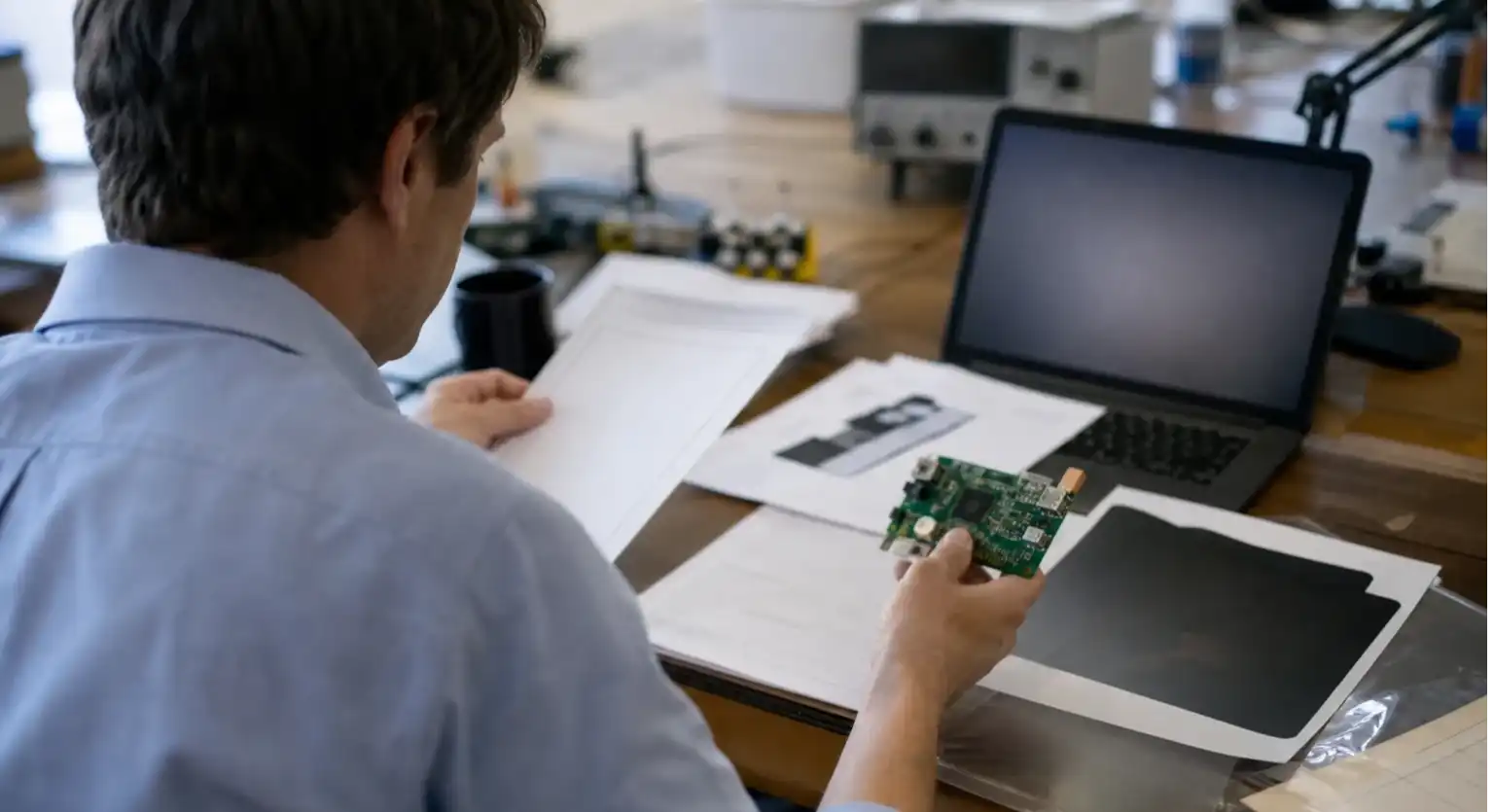
Scènes à faire and functional elements fall entirely outside copyright. In software, integrated circuit, and semiconductor disputes, this filter does most of the work. A function dictated by hardware constraints, a naming convention required by an interface standard, or a layout shaped by manufacturing tolerances is not a protectable expression, even when two engineers land on identical solutions. Protectable material lives in the expressive choices: code comments, documentation, and diagrams.
When to Bring in a Copyright Attorney
Counsel’s first job is diagnostic, and it happens before any filing decision.
- Confirm registration status, timing, and chain of ownership.
- Assess access and substantial similarity evidence.
- Estimate damages exposure and the defendant’s ability to pay.
- Weigh venue, limitations period, and the choice of forum.
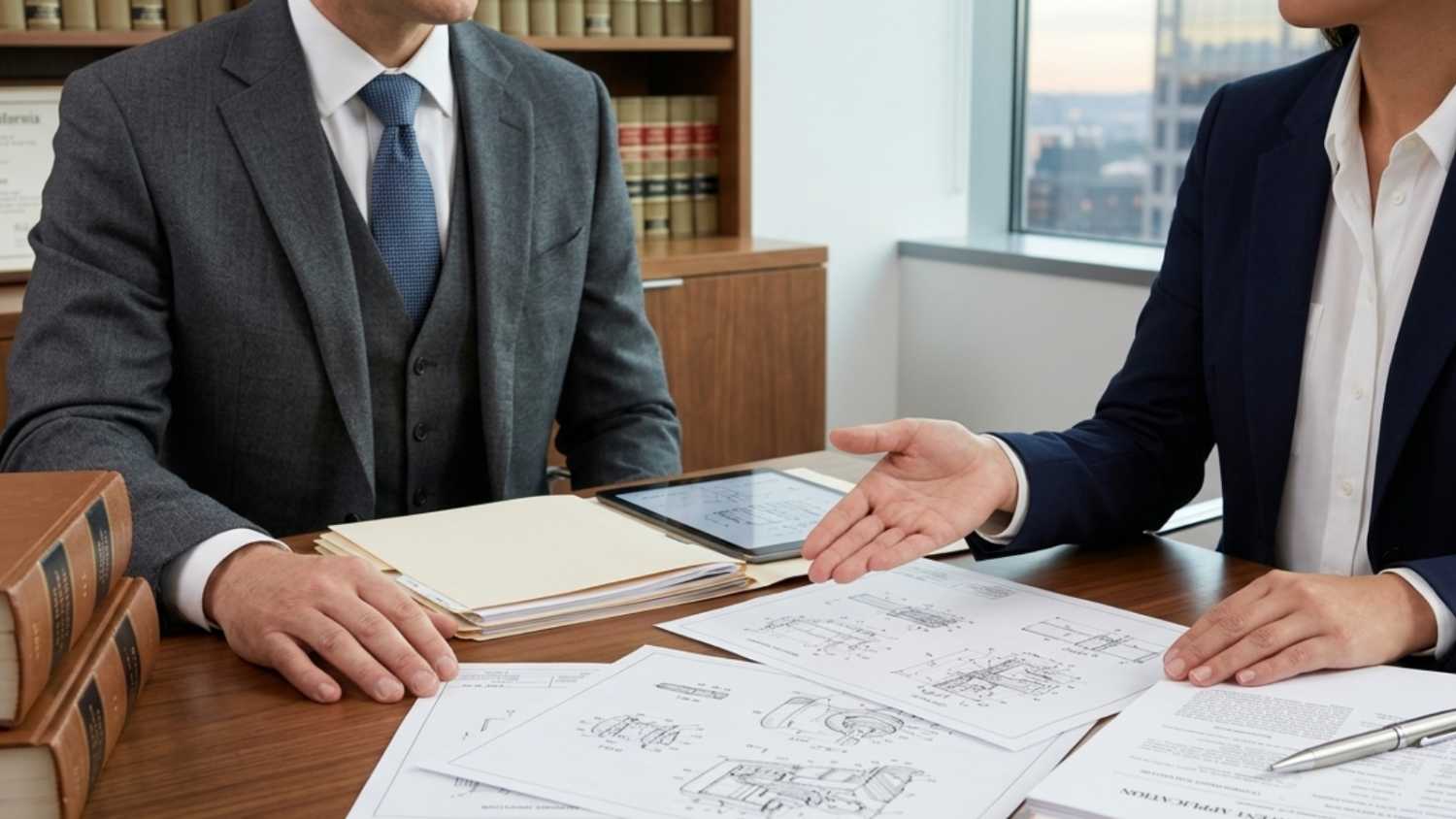
Once a matter is underway, counsel files the complaint, manages discovery, negotiates settlement, and prepares expert evidence for trial. Cases built on source code, version histories, and design files need someone who keeps the analysis on protectable expression rather than the underlying method. Business owners who are still deciding often start by considering when to hire an attorney for copyright litigation.
Discuss Your Copyright Enforcement Options
Choosing among a demand letter, a CCB filing, and a federal lawsuit comes down to registration timing, evidence strength, damages at stake, and what a defendant can pay.
Heimlich Law, PC handles copyright enforcement and defense for California businesses from its office in San Jose, CA. Alan Heimlich is admitted to the State Bar of California, the USPTO, the Northern District of California, and the Ninth Circuit, and worked in engineering at Intel, Fujitsu, IDT, and Sun before practicing law.
Call (408) 253-3860 to review your matter with a copyright litigation attorney who reads technical evidence firsthand.
Frequently Asked Questions
How Does the Three-Year Statute of Limitations Apply?
Section 507(b) sets a three-year window, measured in the Ninth Circuit from when the owner discovered, or reasonably should have discovered, the infringement. Warner Chappell v. Nealy (2024) held that a timely claim recovers damages for the full infringement period. The Court assumed, without deciding, that the discovery rule applies, so Ninth Circuit precedent still governs the start of the clock.
Can an Unregistered Copyright Owner Recover Attorney Fees?
Generally no. Fee recovery under 17 U.S.C. § 505 follows the same § 412 timing rule as statutory damages. Where registration came after the infringement began and more than three months after first publication, fees are usually unavailable even on a winning claim. Actual damages and infringer profits remain in play.
Does Filing a Lawsuit Immediately Stop an Infringer’s Sales?
No. A complaint starts the case; it does not halt the defendant’s activity. Stopping ongoing use requires a preliminary injunction, which the plaintiff must request and support with evidence.
How Long Does a Copyright Lawsuit Take?
There is no fixed timeline. Duration tracks the discovery scope, the volume of technical material in dispute, and the amount of motion practice the parties generate. Copyright Claims Board proceedings are designed to move faster than federal court proceedings.
What Drives the Cost of Copyright Litigation?
Discovery, primarily. Costs rise with the volume of documents and source code exchanged, the number of depositions, and the need for technical experts. A court may award fees to a prevailing party under 17 U.S.C. § 505, but that award is discretionary.
Who Owns Copyright in Work Created by Employees or Contractors?
An employer owns work an employee creates within the scope of employment, as a work made for hire under 17 U.S.C. § 101. Contractor work qualifies only within nine narrow statutory categories and only with a signed agreement. Absent that, the contractor owns the copyright until a written assignment transfers it.
Can You Sue Over Infringement That Happened Outside the United States?
The Copyright Act generally does not reach conduct occurring entirely abroad. Where an act of infringement occurs inside the United States, Ninth Circuit courts have permitted recovery of profits flowing from resulting foreign exploitation. Purely overseas copying requires enforcement under local law.